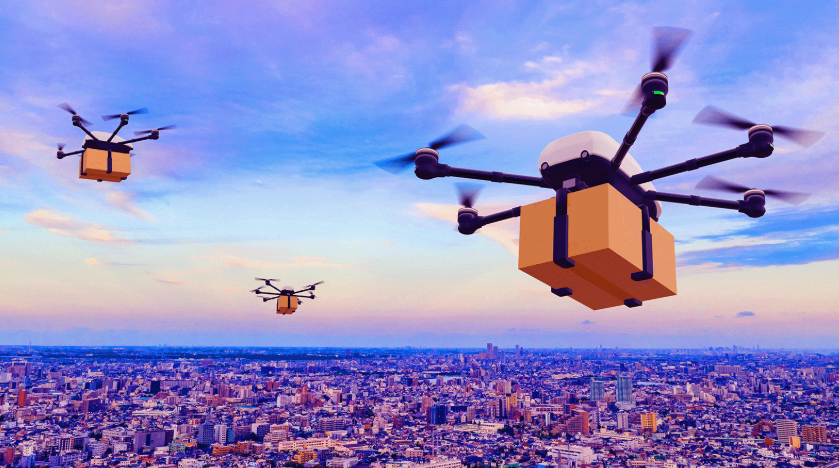
The integration of drones into delivery services marks a significant shift in logistics. Enhanced aerodynamics, improved battery life, and autonomous navigation systems contribute to operational efficiency. Businesses can achieve faster deliveries and lower costs, yet challenges related to safety and regulation persist. As the industry evolves, understanding these dynamics becomes essential. What strategies will emerge to navigate these hurdles while capitalizing on the benefits?
The Evolution of Drone Technology in Logistics
The evolution of drone technology in logistics has progressed significantly over the past decade, marked by advancements in aerodynamics, battery efficiency, and navigation systems.
Autonomous navigation capabilities have enhanced operational efficiency, enabling drones to execute complex delivery routes.
Additionally, aerial mapping technologies facilitate precise location tracking and route optimization, contributing to increased reliability in logistics operations and the potential for expanded service offerings in the field.
Benefits of Drone Delivery for Businesses
Advancements in drone technology have positioned businesses to leverage aerial delivery systems, resulting in a range of operational benefits.
Primarily, these systems enhance cost efficiency by reducing transportation expenses and minimizing labor costs.
Additionally, drone delivery significantly improves customer satisfaction through faster delivery times and increased accessibility.
Consequently, businesses adopting drone technology can expect enhanced competitive advantage and optimized logistics operations.
Challenges and Regulatory Considerations
Numerous challenges and regulatory considerations confront the widespread adoption of drone delivery services. Safety concerns, particularly regarding collisions and privacy, necessitate stringent measures.
Additionally, airspace regulations must evolve to accommodate increased drone traffic, ensuring safe integration with manned aircraft.
Addressing these issues is crucial for fostering public trust and enabling innovation while balancing operational efficiency and regulatory compliance in this burgeoning industry.
See also: echoturfgagnant
Future Trends in Drone Delivery Services
As regulatory frameworks adapt to address the safety and privacy concerns associated with drone delivery, emerging trends are shaping the future of this technology.
Significant advancements in autonomous navigation are expected to enhance operational efficiency, enabling drones to optimize routes in real-time.
Additionally, the integration of aerial logistics systems will streamline supply chains, facilitating faster deliveries and greater consumer accessibility in urban environments.
Conclusion
In summary, drones are poised to transform delivery services, embodying the adage “time is money” through enhanced efficiency and cost savings. While the evolution of drone technology presents significant benefits for businesses, it also necessitates careful navigation of regulatory frameworks and safety concerns. As advancements continue, the logistics sector must balance innovation with compliance to fully harness the potential of drone delivery, ensuring it becomes a reliable and integral component of modern supply chain solutions.